
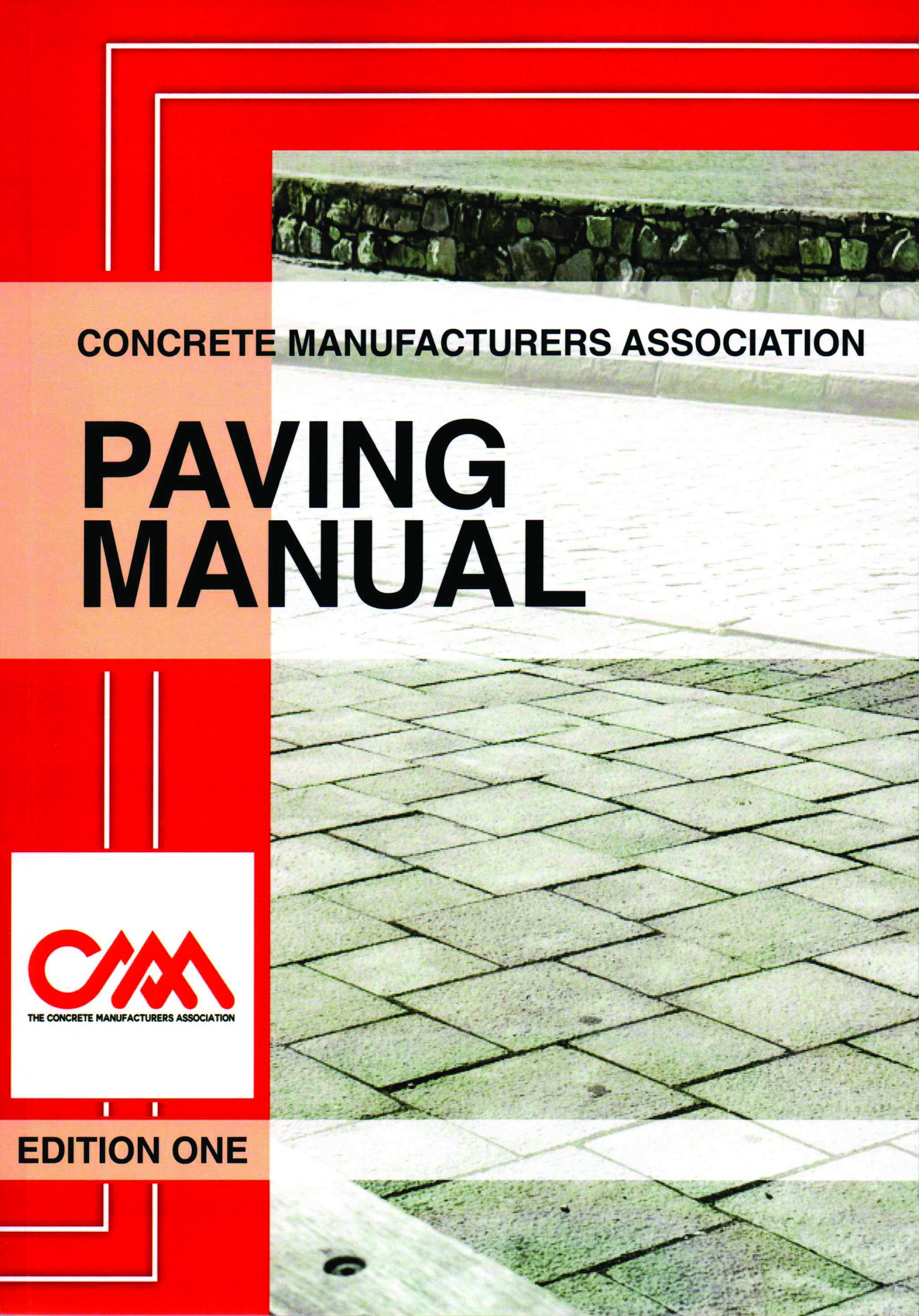
The new Concrete Manufacturers Association (CMA) Paving Manual is a publication thathas something for everyone involved in the manufacture, specificat
The new Concrete Manufacturers Association (CMA) Paving Manual is a publication thathas something for everyone involved in the manufacture, specification and laying of concrete paving blocks.
It should spend very little time gathering dust on a bookshelf. Although aimed at tertiary institutions and professionals it is equally useful to anyone involved in the design and manufacture of concrete block paving. In its First Edition it combines the latest information on concrete block paving in South Africa with useful references to the current SANS standards for easier identification of requirements that apply to particular aspects of paving rather than searching through a range of separate documents.
What becomes apparent when working through the manual is the breadth of information it contains. It starts with the development and history of concrete block paving before moving into applications, block types, laying patterns and the factors that influence the selection of a particular paving system. Comparisons with other paving solutions also help put concrete block paving into perspective.
It also has a depth of its technical content with attention given to pavement design and the various factors that need to be considered when selecting and designing a pavement explained in a way that makes it easy to understand without oversimplifying it. Traffic loading, subgrade conditions, materials, drainage and construction requirements all have an influence on the performance of a paved surface and the manual deals with these issues in a structured manner.
For someone less familiar with paving technology this information provides a useful introduction to why a particular pavement should be designed and constructed in a particular way. For experienced manufacturers tradesmen and professionals it provides a convenient reference against which existing practices can be checked.
There is also practical information covering specifications, dimensional tolerances, testing and quality requirements. Site management and construction practices receive attention too, including earthworks and preparation of the pavement foundation. This is important because the performance of a block pavement depends on considerably more than the quality of the blocks themselves. Poor preparation, inadequate drainage or unsuitable construction practices can compromise an otherwise correctly designed pavement.
The inclusion of maintenance guidance is another useful feature. Concrete block paving is often selected because individual units can be removed and replaced, but that does not eliminate the need for proper maintenance. The manual looks at the issues that can arise during the service life of a pavement and how they should be addressed.
Case studies add another dimension to the publication. They provide practical examples of how the principles discussed in the technical sections are applied and make some of the more detailed design and construction information easier to understand. The checklists are another addition that is particularly welcome as they provide a practical way of applying the information contained in the manual to real projects and can help ensure that important considerations are not overlooked.
