
Rotary kilns and dryers operate under extreme heat and heavy continuous loads, often with persistent vibration. Inside the kilns, the interface betwee
Rotary kilns and dryers operate under extreme heat and heavy continuous loads, often with persistent vibration. Inside the kilns, the interface between the kiln tyre and the shell is one of the most critical lubrication points on the machine. This is a key piece of machinery in cement production, lime calcining, mineral processing and chemical manufacturing and means that finding the right lubricant and application method for kilns is essential.
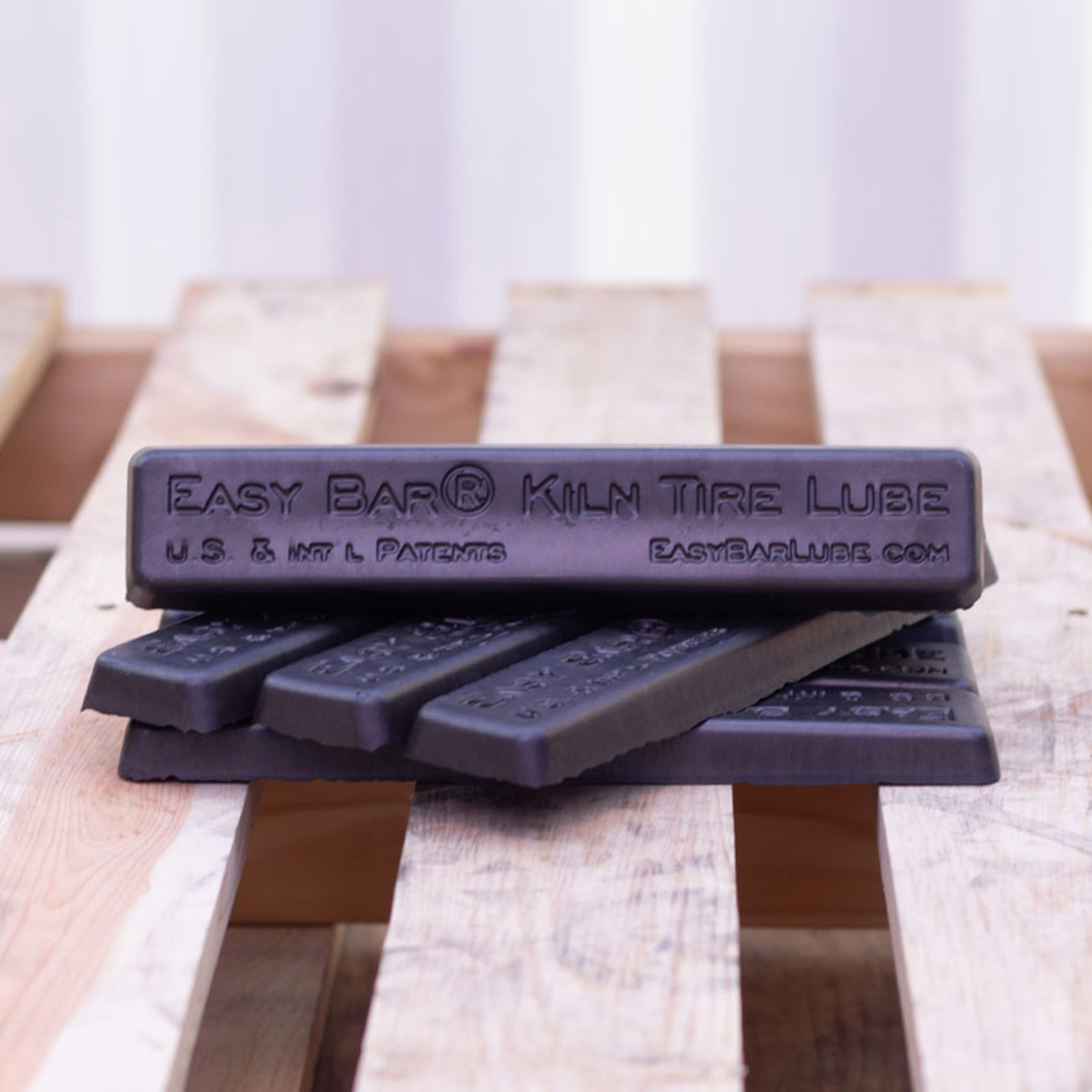
To help meet this need in the local market, lubrication specialists Lubrication Engineers (LE) South Africa have introduced Easy Bar which is a high-viscosity solid lubricant specifically designed for the conditions found at the kiln tyre bore and shell interface.
What Easy Bar is and how it works
Easy Bar is a solid lubricant bar that is placed directly into the gap between the kiln tyre bore and the shell. As the kiln rotates, the bar slowly melts and distributes a protective lubrication film across the contact surfaces, preventing metal-to-metal contact without leaving residue.
Application is straightforward. The bars can be manually placed into the small gaps between the tyre bore and shell typically at the 5 o’clock or 7 o’clock position along the incline of the roll. However, LE also supplies an Easy Bar Tool to make it easier to safely position the bar. The tool is an extended rod with a slotted holder and trigger-operated injection pin that allows operators to apply the bar from a safe distance.
Easy Bar contains LE’s proprietary Almasol additive which is central to how well it works in the intense conditions of a kiln. Almasol is a solid wear-reducing additive that can withstand temperatures up to 1038 oC and is formulated to cling to metal surfaces, forming a microscopic protective layer without building up or affecting clearances.
“In a kiln, the concern is always that extreme heat and load will simply push lubrication out of the contact zone,” says Trevor Wentzel, sales representative at LE. “Almasol changes that. It allows the lubricant to stay in place and maintain a film under conditions that would displace most products.”
Dry graphite has historically been the default lubrication choice for kiln tyre applications. While graphite performs fine at high temperatures, it has limited adhesion and is easily displaced by vibration, shell movement and dust contamination. Maintenance teams typically have to reapply it multiple times in each shift. The fine particles of graphite dust that are produced can also contaminate nearby equipment and surfaces.
Easy Bar, however, sticks to the contact points and has a high film strength meaning it has much longer lubrication intervals than graphite. It also melts cleanly into a film so it doesn’t contaminate surrounding surfaces. “A common mistake when customers first use Easy Bar is over-applying it,” says Wentzel. “Because maintenance teams are use to using graphite which needs to be reapplied constantly they think it’s the same with Easy Bar. But Easy Bar lasts much longer and doesn’t have to be replaced nearly as often. This means far less product is used overall.”
The LE team conducted a technical assessment of the Easy Bar product at a cement production site and Wentzel says that they saw better lubricant retention, a stable and visible lubricating film, reduced evidence of metal surface distress and more consistent tyre movement behaviour when compared to the previous lubricant that was being used.
Poor lubrication at the tyre and shell interface of a rotary kiln or dryer can lead to fretting corrosion, kiln ovality growth, alignment instability and in severe cases shell cracking, all of which are expensive to repair and disruptive to operations. By maintaining a consistent lubricating film Easy Bar helps reduce these risks and extends the service life of kilns and dryers’ mechanical components.
“Easy Bar isn’t a premium product that costs more for the sake of it it’s a product that reduces total lubrication consumption, cuts housekeeping time and keeps kilns running reliably for longer,” says Wentzel.
