
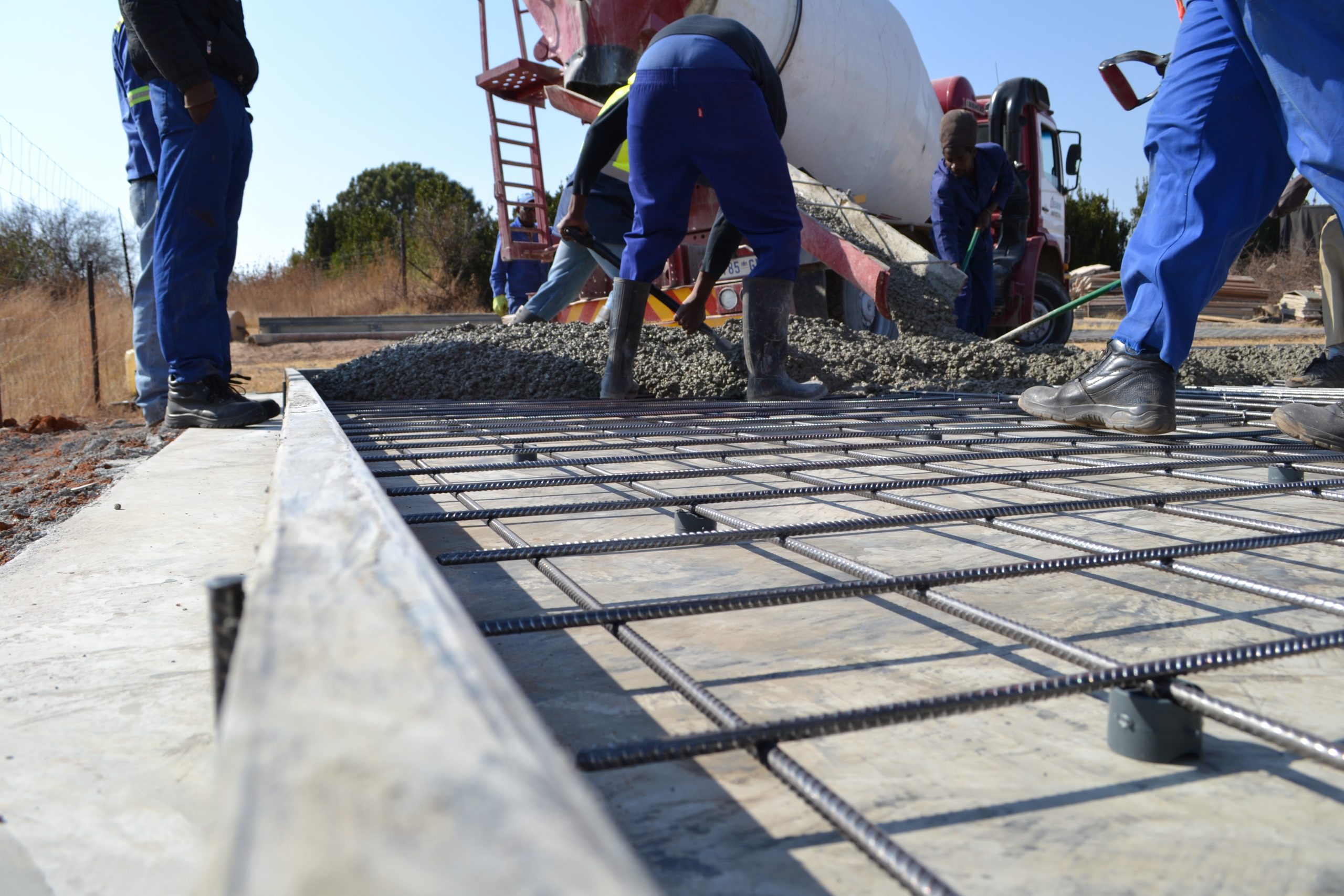
South Africa has a well-developed readymix concrete industry supported by extensive manufacturing capacity and established delivery networks. Despite
South Africa has a well-developed readymix concrete industry supported by extensive manufacturing capacity and established delivery networks. Despite these advantages a significant proportion of construction projects continue to rely on site-mixed concrete.
While site mixing may appear familiar and cost-effective modern construction projects increasingly demand higher levels of quality control and performance. For these reasons globally, readymix concrete has become the preferred choice for many construction projects.
1. Convenience
Readymix concrete is manufactured to a specified design mix and delivered directly to site when required. Contractors can order concrete with the required specification including strength and workability for specific applications which effectively eliminates the need to source, store and mix raw materials on site. The result is a more streamlined construction process with less disruption to site operations.
2. Consistent Quality
Readymix plants operate under controlled manufacturing conditions by trained personnel using calibrated batching and mixing equipment. Every constituent material is measured accurately to ensure the concrete produced meets the specified performance requirements. This level of control is difficult to achieve consistently with site-mixed concrete where variations in material quality and moisture content as well as batching practices can affect the final product.
3. Faster Construction
Time is one of the most valuable resources on any construction project. Readymix concrete eliminates the delays associated with manual batching and mixing allowing contractors to focus on placing and finishing concrete. Multiple deliveries of different types of concrete can be scheduled throughout the day where needed to a continuous supply of material is available where needed as the project progresses. This reduces interruptions during critical construction phases.
4. Improved Cost Efficiency
Although the direct cost of purchasing cement and aggregate may appear lower the actual cost of site mixing often includes additional expenses such as labour, equipment, material wastage, theft, storage and quality-related rework. When these factors are considered then the overall cost difference between site-mixed and readymix concrete is often significantly less than anticipated.
5. Increased Productivity
Construction projects are under constant pressure to improve productivity while maintaining quality standards. By removing the need for on-site concrete production labour resources can be allocated more effectively to core construction activities. This allows contractors to complete projects more efficiently and improve overall site utilisation.
6. Design Flexibility
Modern readymix plants can produce a wide range of concrete mixes tailored to specific project requirements. These include high-strength concrete, pump mixes, architectural concrete, self-compacting concrete, rapid-hardening mixes and specialised solutions for challenging environmental conditions. The ability to customise concrete properties provides engineers and contractors with greater design flexibility and performance assurance.
7. Reduced Construction Risk
The use of concrete supplied to a verified specification reduces the risk associated with inconsistent site batching practices. Comprehensive production material traceability and quality-control procedures should be available to provide an additional layer of assurance. Should performance concerns arise the availability of documented production data assists engineers and project teams to identify the root cause and implement corrective measures.
8. Better Quality Assurance and Traceability
Every load of readymix concrete can be linked to specific batch records detailing material quality-control data. This traceability is particularly important where compliance with specifications must be demonstrated. Site-mixed concrete rarely offers the same level of documentation and accountability.
9. Cleaner and Safer Construction Sites
Readymix concrete significantly reduces the need for stockpiles of aggregate and cement on site. It also eliminates many of the mixing activities that contribute to waste and congestion. A cleaner site improves safety and reduces housekeeping requirements. It also minimises environmental impacts associated with material handling and storage.
10. Enhanced Sustainability
Centralised concrete production allows for more efficient use of raw materials. Modern batching plants also implement environmental management practices aimed at reducing dust and lowering water consumption. By producing only the quantity of concrete required and optimising logistics the use of readymix concrete can contribute to more sustainable construction practices while supporting long-term economic development and employment within the sector.
Summary
While site-mixed concrete may still have a role on smaller projects, the technical and operational benefits of readymix concrete make it the preferred choice wherever time is of the essence and performance is critical to project success.
