Mental health pressures across South Africa continue to rise. For those working in construction this is exacerbated by long hours, high-risk environme
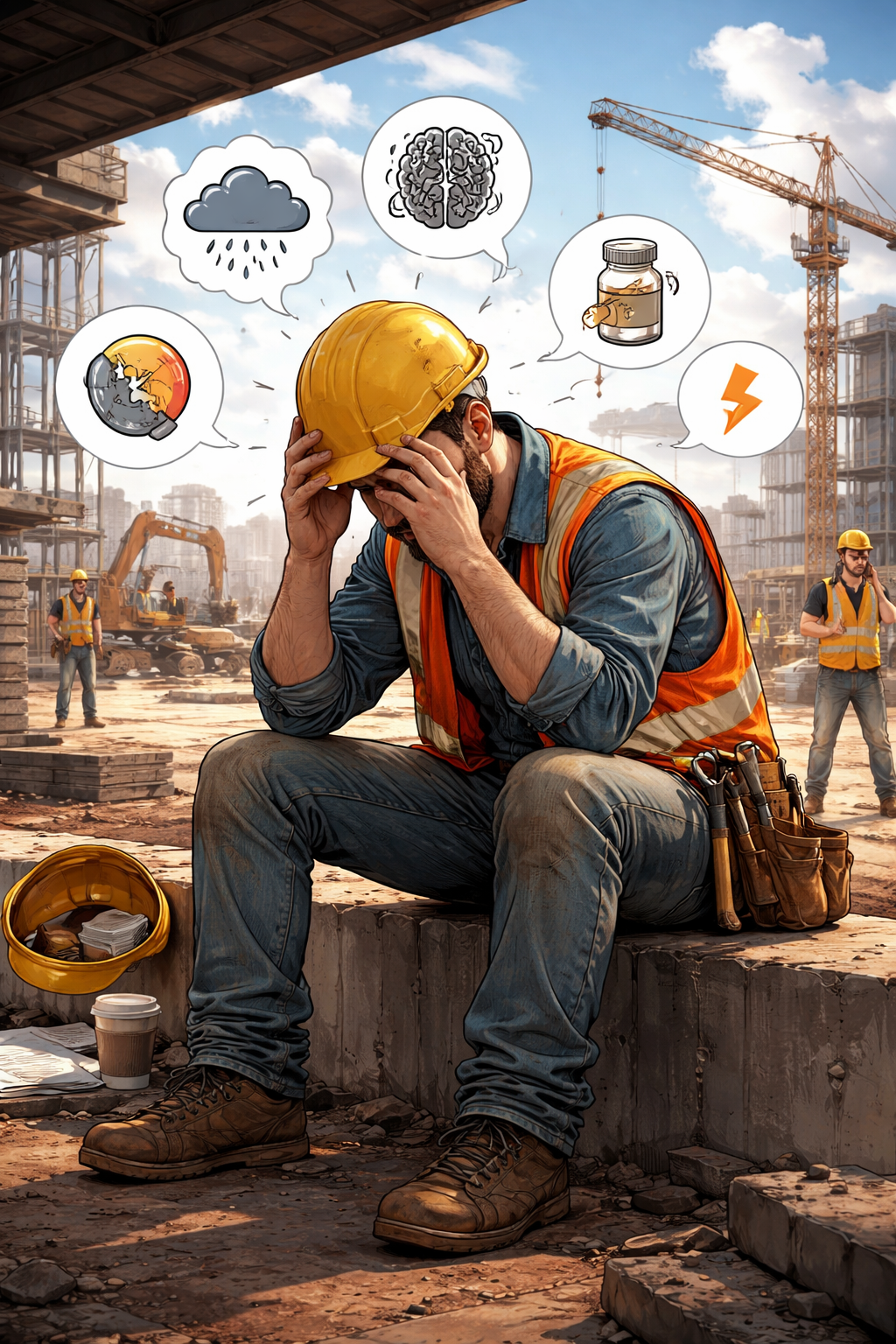
Mental health pressures across South Africa continue to rise. For those working in construction this is exacerbated by long hours, high-risk environments, tight deadlines, job insecurity and a culture of stoicism creating an environment of stress, anxiety and emotional fatigue. These pressures affect safety and productivity as well as the lives of workers, their families and the wider community.
“International research echoes the severity of the problem,” says Petra Devereux, executive director, Master Builders Association Western Cape (MBAWC). “We need to intensify our efforts, highlighting mental health as an essential and urgent industry priority.”
A 2020 Chartered Institute of Building (CIOB) survey of 2081 construction workers found that more than a quarter (26%) had experienced suicidal thoughts, while almost half reported poor mental health and only 56% said their workplace had a mental-health policy. The updated 2025 report shows little improvement: workers remain reluctant to seek help often suffering in silence until the strain becomes overwhelming. Of the 865 respondents in 2025, 24% reported stress, 20% fatigue, 18% anxiety, 7% depression and 2% suicidal thoughts. Rising pressures such as limited-term contracts, long commutes, time away from family and a ‘macho’ culture further exacerbate the problem.
These global concerns mirror South Africa’s own construction landscape. Local research from the Construction Industry Development Board (CIDB) and the Department of Employment and Labour confirms that construction workers shoulder significantly higher mental-health risks than most other sectors.
The reasons are systemic: unstable work opportunities, hazardous conditions, economic stress, lack of diversity, substance abuse as a coping mechanism and the persistent stigma that discourages openness. Further, the South African Forum of Civil Engineering Contractors’ (SAFCEC) recent workplace trends also pointed to a rise in anxiety and burnout among supervisors and site managers due to increased administrative and compliance demands.
“Mental health challenges have become impossible to ignore. We’re seeing increased pressure and mental fatigue across all levels from business owners to labourers who start their day with long, expensive commutes. With the surge in developments in the Western Cape and frequent project commencement delays many contractors are being pushed into impossible timelines. By raising awareness, we want to shine a light on the often-overlooked mental well-being of our workforce. Mental health is a legitimate safety concern, not an optional extra,” says Devereux.
The human impact is profound. Workers under strain are more vulnerable to accidents and slower reaction times. Productivity suffers, team cohesion breaks down and communication essential on fast-moving sites weakens. As Devereux notes, “A safe site is not only one free of physical hazards. It is one where mental wellness is protected.”
Chandré Abrahams, chairperson of the MBAWC marketing committee, agrees that cultural and systemic barriers compound the problem. “Construction has long been shaped by a ‘work through it’ mindset. Many workers fear judgement or even job loss if they speak up. Stigma remains one of the biggest obstacles especially in male-dominated environments. But talking about stress should be as normal as talking about scaffolding safety. That’s the shift we need.”
This cultural shift must begin with leadership. MBAWC emphasises that site managers and senior staff play a pivotal role in breaking down stigma and creating a climate where workers feel safe to voice concerns. “Leadership must show visible support. If managers don’t acknowledge mental health as a real issue, no policy or poster will make a difference,” says Devereux.
Practical, accessible interventions are essential. MBAWC encourages companies to embed mental well-being into their health and safety systems, just as they do with Personal Protective Equipment (PPE) or fall protection. Recommended steps include:
• Incorporating mental health into site-specific health & safety policies
• Providing access to counselling or Employee Assistance Programme (EAP) services
• Scheduling monthly mental-health toolbox talks
• Training supervisors in mental-health literacy and supportive communication
• Appointing mental-health champions or ‘first aiders’ on site
• Offering anonymous reporting channels
• Ensuring fair workloads and realistic deadlines
• Encouraging peer-support groups and fostering work–life balance where possible
Many South African firms are already adopting these measures demonstrating that meaningful progress is possible even in high-pressure environments. Abrahams stresses that small, consistent habits can transform site culture. “Real change doesn’t only happen in workshops it happens in daily check-ins, in supervisors asking, ‘Are you okay?’ and in teams knowing they won’t be judged for speaking up.”
MBAWC’s commitment includes providing members with guidance, awareness materials, toolbox talk templates, and links to established resources such as the South African Depression and Anxiety Group’s (SADAG) counselling line, community mental-health organisations and sector-specific guidance from the Construction Industry Development Board (CIDB) and MBAWC.
For employers and site managers, MBAWC’s message is clear. “Mental health a safety issue, a productivity issue and a people issue. When workers feel supported, they work more safely, more efficiently and with greater resilience. Healthy businesses are built on healthy people,” says Abrahams.
“Employers must prioritise mental wellness with urgency. Our industry is built on human effort, and those individuals deserve care, support and understanding. Strong foundations aren’t only made of concrete. They are built on the wellbeing of the people who bring our projects to life.”
