
The certification of South Africa’s cement is set to take a step forward with the accreditation of the highly organised and respected CMA Certificatio
The certification of South Africa’s cement is set to take a step forward with the accreditation of the highly organised and respected CMA Certification Services which will act to ensure compliance with the strict standards that govern the supply of cement locally.
In an industry that is under pressure from material failures and structural collapses in the last years the accreditation of CMA Certification Services (Pty) Ltd (CMACS) by the South African National Accreditation System (SANAS) in September 2025 positions it as a new authority in the certification of cement for the South African market.
The move comes at a time when concerns around inferior construction materials both locally produced and imported have intensified scrutiny of quality control across the construction value chain. All cement sold in South Africa is subject to compulsory national standards and regulatory oversight. Certification is a critical mechanism through which compliance is verified ensuring cement placed on the market meets strength, composition and performance requirements intended to safeguard structural integrity and public safety.
CMACS is a subsidiary of the Concrete Manufacturers Association (CMA), an industry body with long-standing involvement in quality management systems, concrete product certification and technical standards within the civil engineering and construction sectors. Its accreditation introduces an additional certification body into a space historically dominated by the South African Bureau of Standards (SABS), later joined by other SANAS-accredited entities as market conditions evolved. CMACS becomes the fourth certification body accredited to certify cement against compulsory South African requirements.
Cement certification in South Africa is grounded in national standards and regulatory enforcement. Common cements must comply with SANS 50197 while masonry cements fall under SANS 50413. The latter are expressly not intended for use in concrete, a distinction that remains poorly understood on many construction sites and has contributed to inappropriate material use.
In addition to compliance with South African National Standards cement products must meet the requirements of the National Regulator for Compulsory Standards (NRCS). Certification serves as independent confirmation that a manufacturer’s production processes and products are verified against these requirements.
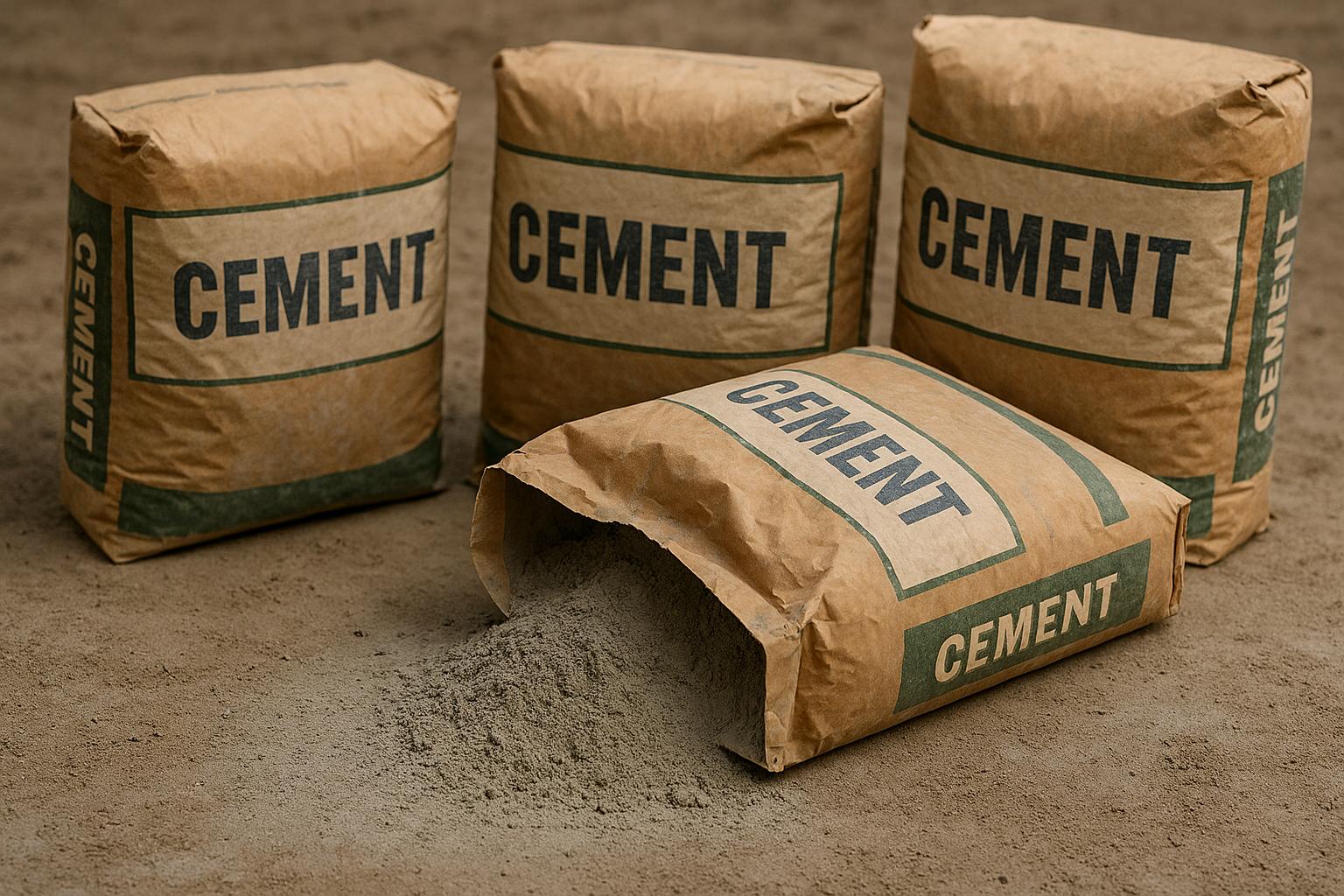
Certified cement is identified through markings on packaging that indicate the cement’s strength class, composition and a valid Letter of Authority (LOA) issued by the NRCS. An LOA is issued for each cement type from each manufacturing source and provides assurance that the product is subject to ongoing surveillance and testing.
Did you know?
Cement is often incorrectly used as a catch all term to describe concrete products, but the distinction is fundamental. Cement is a fine powder and a material; concrete is the product formed when cement is mixed with aggregate and water. There is no such thing as a cement floor, cement brick or cement wall. Floors, bricks and walls made using cement are concrete products.
Cementitious materials used in concrete are finely ground mineral powders. When combined with water they react chemically through a process known as hydration forming a rigid mass that binds aggregate particles together. This reaction gives concrete its strength and durability.
Portland cement forms the basis of all common cements in South Africa. It is manufactured using limestone and shale blended in specific proportions and fired at high temperatures to produce cement clinker. Once cooled, a small quantity of gypsum is added before the clinker is ground into the fine powder supplied to the market as cement. Variations in composition, fineness and manufacture have a direct impact on performance making quality control essential.
CMACS enters the certification environment with a model that differs from traditional paper based and sequential auditing practices. The organisation has adopted a cloud based electronic audit platform that enables more detailed audit execution, digital evidence collection and consistency across assessments.
Audit reporting through the system is immediately available once audits are completed allowing companies to address long standing concerns within the industry about delays between inspections, testing and the issuance of certification outcomes. Resources supporting sampling and the collection of test results are structured to improve turnaround times and data availability.
Its certification approach also places emphasis on the participation of audited manufacturers using the audit process to reinforce understanding of applicable standards to improve quality management systems and strengthen control of non conformances. All audit processes, reporting and record keeping are conducted electronically reducing administrative burden and paper usage.
The accreditation of CMACS expands capacity within the cement certification system that will dramatically reduce delays. For manufacturers, it provides a fast and transparent route to certification. It also increases oversight capability in a sector where failures can have severe consequences.
Industry professionals, contractors and end users must ensure they continue verifying cement certification markings and LOA numbers on packaging, with the CMACS mark of approval now joining existing accredited identifiers as confirmation of compliance and consistent quality.
The CMA and CMACS continue to provide technical support and certification services related to ISO 9001 quality management systems, cement and precast concrete products. The CMA’s database of producer members remains a reference point for sourcing construction materials from manufacturers operating within formal certification and compliance frameworks.
Henry Cockcroft is Executive Director of CMA Certification Services.
