
Dr Kim Timm of Stellenbosch University speaking at Concrete Society of Southern Africa’s (CCSA) SANS 51992 1 1 seminar in Kempton Park said the often-
Dr Kim Timm of Stellenbosch University speaking at Concrete Society of Southern Africa’s (CCSA) SANS 51992 1 1 seminar in Kempton Park said the often-overlooked subject of serviceability limit states is critical to determine whether a structure can carry its loads safely and how that structure performs in everyday use.
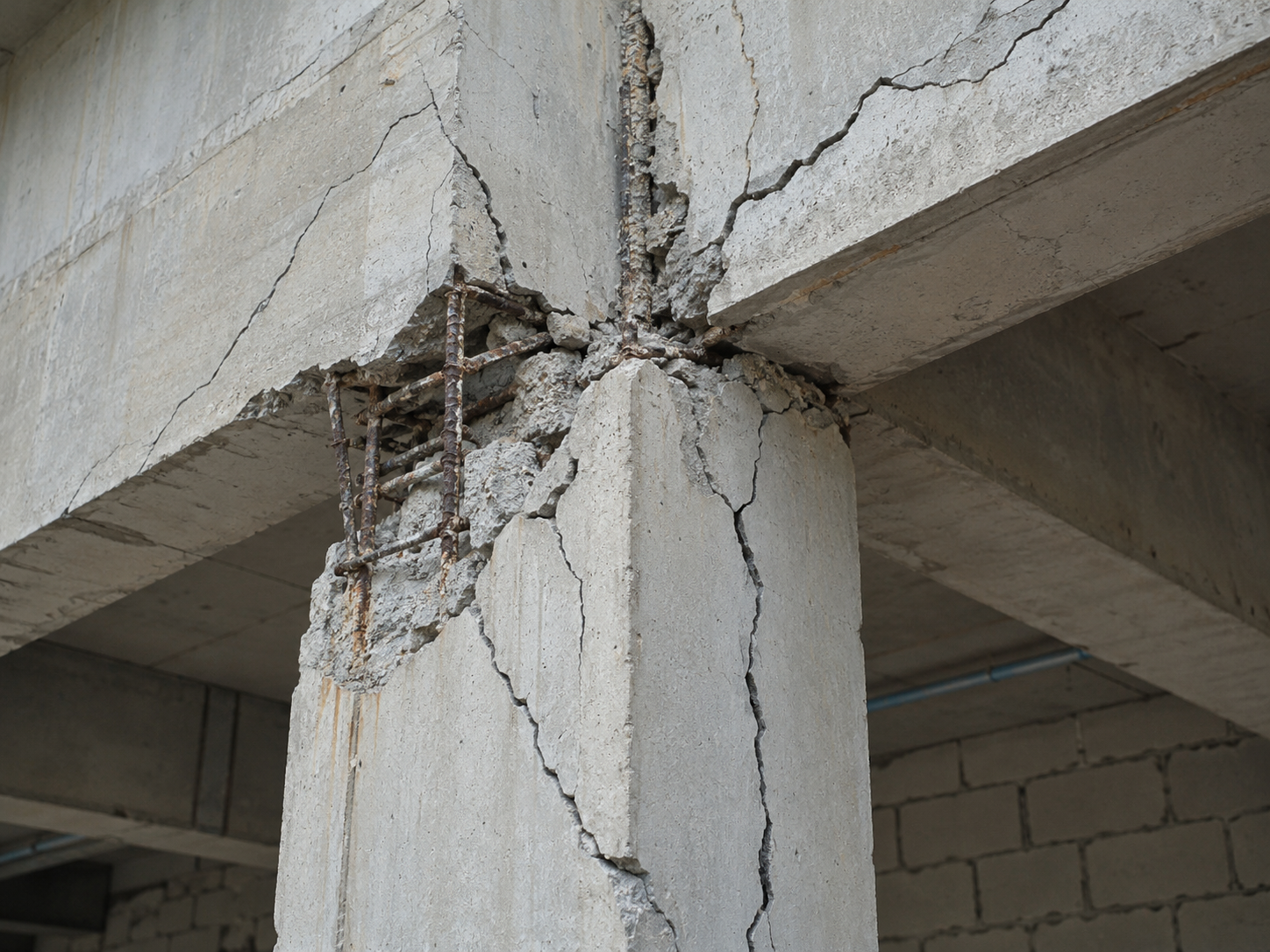
She began the talk by stressing that concrete will crack and that the question is not whether cracks occur but rather whether they impair function, durability or appearance. In ordinary office buildings, a crack of 0.3 mm may be acceptable but in water retaining structures even 0.2 mm can compromise performance. This is because cracks provide pathways for moisture and chlorides which accelerate reinforcement corrosion and undermines durability.
They can also create unacceptable visual blemishes particularly in architectural feature walls. The new code therefore sets clear crack width limits with South Africa’s National Annex adopting 0.3 mm as the general threshold while tighter limits apply to special cases.
She explained that crack control can be achieved either through stress limitation or by directly calculating crack widths. Stress limitation ensures reinforcement remains below levels that would induce cracking. With the new code engineers are able to calculate crack widths using SANS 51992 1 1 equations which relate reinforcement spacing, bar diameter and strain distribution to expected crack widths. It is also worth noting in the code that it recognises that closer bar spacing reduces crack widths which is a principle long recognised in practice. “When I started work, the old guys would always say 12 mm bars at 150 spacing that was their answer to everything,” she recalled. “Annoying at the time, but actually quite effective for crack control.”
“The new code provides tabulated values for simple cases which allows designers to avoid detailed calculations if reinforcement sizes and spacings fall within prescribed limits. For more complex situations equations must be applied although many of these are “plug and play” once the parameters are understood. The emphasis is on ensuring cracks remain narrow enough to protect durability and maintain appearance without requiring impractically heavy reinforcement.
“Deflection control is the other pillar of serviceability. Excessive deflections can damage finishes or misalign facades. The code sets limits of span/250 for total deflection and span/500 for incremental deflection after finishes are installed. The distinction is important: initial deflections occur under permanent loads and long term deflections accumulate gradually. For example, a glass curtain wall must accommodate only the incremental deflection after installation not the full deflection from the slab’s self weight. Ignoring this distinction can lead to costly failures in mechanical and facade systems,” she said.
She continued that South Africa’s National Annex adds further guidance for lightly reinforced structures where Eurocode’s default span to depth ratios proved unconservative. In this case the adjustment of ratios ensures that deflections remain within acceptable bounds even in slender members. These ratios are a good starting point but it is wise to always check the analysis. If deflections exceed the limits, adjust reinforcement or geometry.
By setting explicit crack width limits and refining deflection criteria with practical tools for calculation the code ensures that South African concrete professionals can design structures that stand safely and perform gracefully over their lifetimes.
