
South Africa has shown that it can respond decisively to national crises. Just a few years ago, electricity blackouts threatened the country’s economi
South Africa has shown that it can respond decisively to national crises. Just a few years ago, electricity blackouts threatened the country’s economic and social fabric. Today, a combination of policy reform and private-sector investment has driven a marked turnaround in energy availability with local transport and logistics recovery also showing early signs of progress.
Now, water security has moved to the top of the national agenda.
During 2025, President Cyril Ramaphosa warned that “load shedding has been supplanted by the crisis of water security which poses a similar if not greater threat to the quality of life and economic prospects of all South Africans.” Deputy President Paul Mashatile has since taken a leading role telling delegates at the Association of Water and Sanitation Institutions of South Africa (AWSISA) that leaders must commit to “developing sustainable solutions that guarantee universal access to clean water and sanitation.”
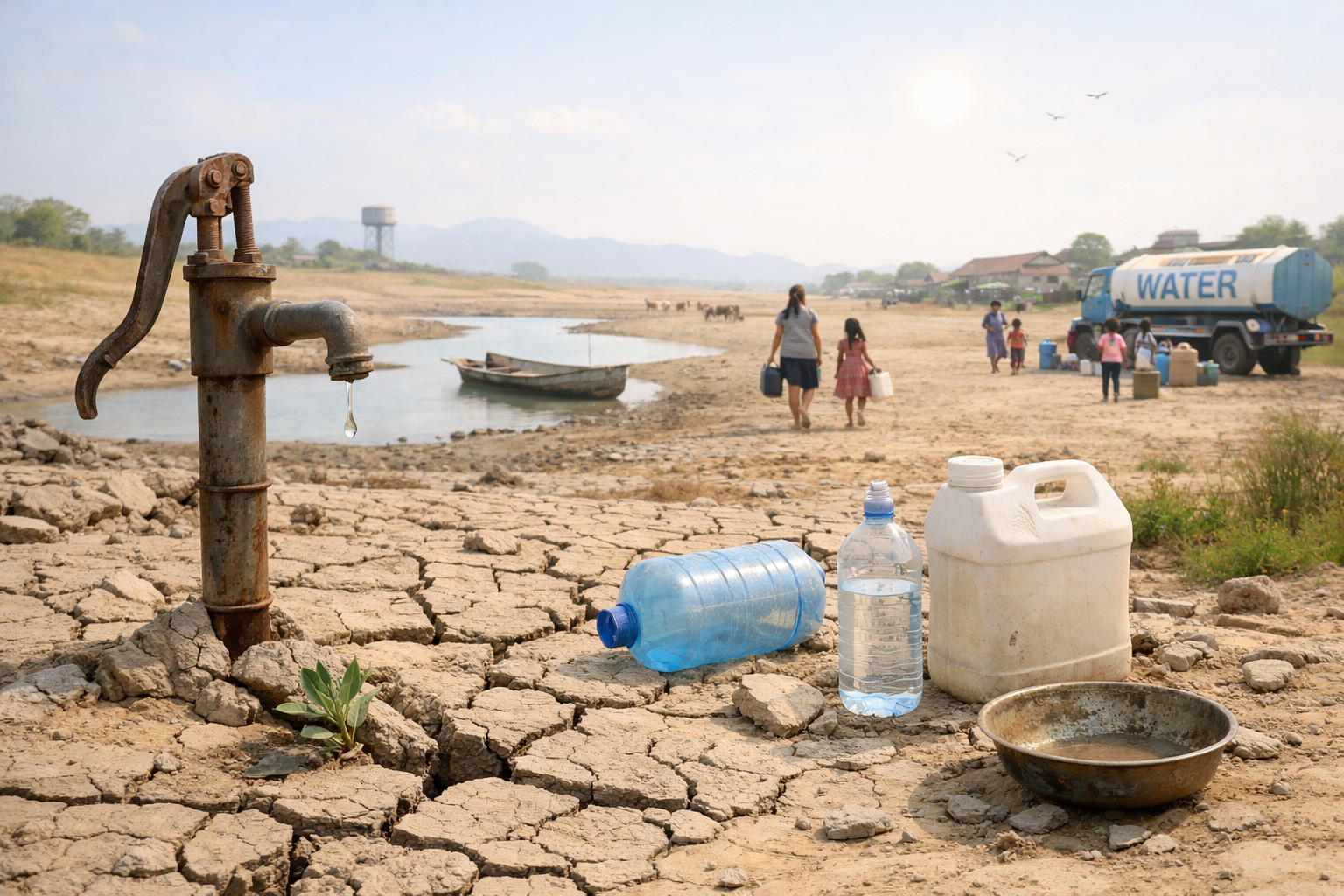
A good example is George Municipality which has been grappling with severe water constraints raising fears of a potential “Day Zero” scenario reminiscent of Cape Town’s 2018 crisis. More broadly, South Africa remains a water-stressed country, with average annual rainfall of just 497 millimetres—well below continental Europe’s average of over 800 millimetres. Most strategic water resources are already fully allocated, while aquifers, rivers and wetlands face increasing pressure from pollution and overuse.
Infrastructure challenges are compounding the problem. National water reliability stands at 68%, while water quality is declining in 60% of supply systems, according to Deputy President Mashatile. The Academy of Science of South Africa estimates that between 3 million and 14 million people lack reliable access to potable water, and the Department of Water and Sanitation projects a potential 17% water deficit by 2030.
High levels of non-revenue water, ageing infrastructure, skills shortages and governance constraints have heightened the risk. Climate change is already exacerbating these challenges through more frequent droughts, floods and heatwaves. Yet, as the country’s recent energy experience has shown, crisis can also be a catalyst for innovation and collective action.
According to Chetan Mistry, strategy and marketing manager at Xylem – WSS (AMETI), a similar shift is now emerging in water management. “There is growing uptake of water resilience among private households, schools, businesses and public services,” he says. “It mirrors what we saw in the solar market, where many individual actions combined into a national trend with meaningful results.”
Across South Africa, practical water solutions are already being deployed. Rainwater harvesting systems linked to rooftops are capturing significant volumes for irrigation, cleaning and when combined with disinfection, even consumption. Water-intensive industries including agriculture, mining, chemical processing and food and beverage are increasingly turning to scalable treatment technologies such as ultraviolet systems and dissolved air flotation to recycle and reuse water.
At the same time, smart leak detection technologies using sonar and electromagnetic methods are enabling faster identification and repair of leaks across pipeline networks. Municipalities are also adopting data-driven management through smart meters, improving revenue collection while reducing water losses via real-time monitoring, fault detection and accurate billing.
Complementary efforts, including public water education, wastewater system improvements and water source rehabilitation are reinforcing these gains.
South Africa faces a serious water challenge but it is not without options. Many of the tools needed to shift from crisis to resilience are already in use, driven by coordinated action at national, municipal, business and household levels. As Deputy President Mashatile told AWSISA delegates, “Together, we have the power to make a difference. Together, we can build a future where water is not a privilege, but a fundamental human right for all.”
That momentum is building. If sustained, 2026 could mark the year South Africa decisively moves from water crisis to water resilience.
