Concor’s role in the construction of Mulilo De Aar 2 South Wind Energy Facility in the Northern Cape, one of the company’s first fully wrapped Balance
Concor’s role in the construction of Mulilo De Aar 2 South Wind Energy Facility in the Northern Cape, one of the company’s first fully wrapped Balance of Plant (BoP) contracts, has a firm commitment to environmental stewardship with the operation meeting the highest standards of compliance while actively protecting biodiversity and managing sensitive ecosystems in the Northern Cape.
The company’s environmental approach is guided by strict adherence to the project’s Environmental Authorisation (EA), Environmental Management Programme (EMPr) and all other relevant permits and licences. Beyond regulatory compliance, Concor embeds best practice environmental management principles throughout the project. According to Zimasa Nodangala, environmental officer on the project, this approach forms part of Concor’s culture of accountability and responsibility. “We see Environmental protection as part of how we build responsibly, ethically and in partnership with the environment. Every activity on site is managed to minimise impact whether it relates to dust control, water conservation or biodiversity protection.”
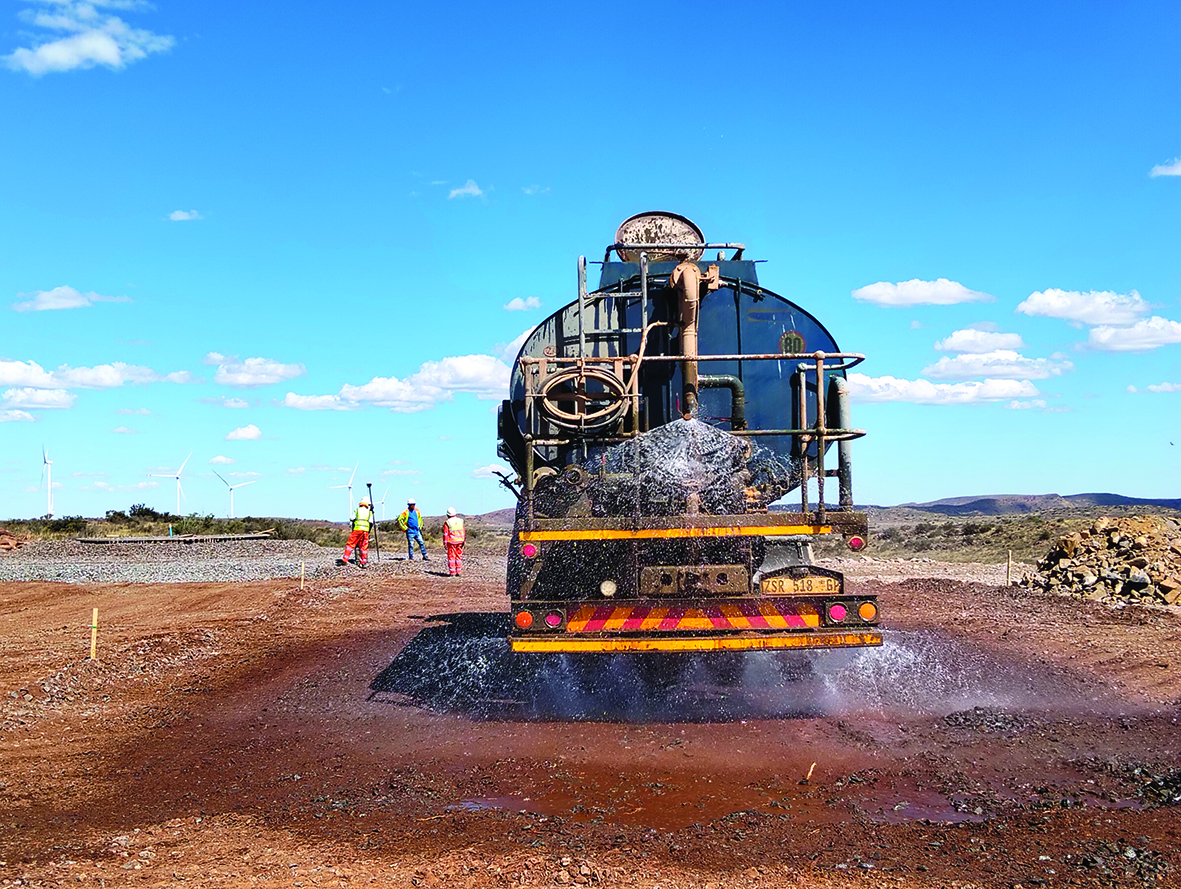
Concor has developed an aspects-and-impacts register aligned with the EMPr to identify and address environmental risks. “Dust suppression measures include restricting vehicle speeds on access roads to 40 km/h and 20 km/h in unconsolidated areas and using water carts for dust suppression. The project team has also implemented controlled blasting techniques to minimise both dust and fly rock,” Nodangala says.
Water usage is another key focus area. All abstractions are authorised by the Department of Water and Sanitation (DWS) and daily monitoring through tally sheets and flow meters ensures responsible consumption. “We monitor water use daily and reinforce awareness through toolbox talks. Water is a scarce resource in this region so it is essential that we use every drop wisely.”
Stormwater management has also been prioritised with drainage systems designed to prevent erosion and direct clean water around active work areas with the goal to avoid sedimentation and protect surrounding ecosystems by managing runoff carefully. Waste management forms another critical component of Concor’s strategy. Waste is segregated at source and transported to licensed landfill sites, with recycling implemented wherever possible. “We take waste separation very seriously not only to meet compliance requirements but because it is the right thing to do,” Nodangala says. “We also ensure that hazardous substances are stored safely and that spill kits and drip trays are available at all times.”
The protection of biodiversity has been a major focus since the start of the project. “Before construction began, a registered specialist conducted a search-and-rescue operation under project-specific permits. Indigenous vegetation was relocated where necessary and biodiversity awareness training was rolled out to every employee, subcontractor and supplier.”
Construction activities are confined to authorised servitudes to prevent disturbance of previously relocated species and sensitive habitats. The company works very hard to ensure that no unauthorised clearing takes place outside the approved footprint. Rehabilitation is done concurrently with construction so that it can restore disturbed areas as quickly as possible using indigenous plants. This helps stabilise soils, prevent erosion and promote long term ecological resilience.
Cultural heritage management has also been important, with the team ensuring that rock kraals which are heritage features of cultural significance, are properly demarcated and protected. Access to some of these sites was challenging and are now all labelled and designated as no-go areas. The company also appointed gate minders and worked closely with local landowners to ensure mutual respect and understanding.
Environmental performance is continuously monitored through monthly Environmental Compliance Reports, Environmental Control Officer (ECO) audits and quarterly HSE audits. “We take a proactive approach. If a potential non-compliance is identified, corrective action is taken immediately. We try maintaining high standards every day, not just during inspections.”
All subcontractors and service providers undergo mandatory environmental induction before commencing work with training offered in multiple languages to ensure full comprehension.
“Everyone who sets foot on site needs to understand the environmental rules and why they matter. We want people to take ownership of their actions and understand that environmental care is part of their daily job.”
As construction progresses on the Mulilo De Aar 2 South Wind Energy Facility, Concor’s goal is to deliver a renewable-energy project of national importance and leave behind a landscape where biodiversity and ecological stability have been protected for generations to come. “Environmental responsibility is part of Concor’s DNA and it is something we take great pride in demonstrating on this project,” she concludes.
